Trauma is any situation or event that gives you a negative opinion of yourself. When you understand that, you can see that everyone has experienced hundreds of events that negatively affected them. People think trauma is what happens to you, such as a divorce or car accident; these events are traumatic for sure.
Trauma is what happens inside of you.
The term trauma often conjures up images of abuse, neglect and devastating experiences that dramatically alter lives. It can take the form of physical harm and suffering to emotional deprivation and household instability, all of which implant seeds of enduring emotional and often physical pain. These events cause internal conflicts and wounds within yourself.
Beyond the more obvious traumas, let’s recognise the covert trauma which is more subtle. These are experiences of not being seen, not being heard, not feeling cherished or loved. We have all had these instances. These events give you a false belief within you that echoes, ‘I am not enough’. You begin to disassociate from parts of yourself, and in doing so, you splinter your own identity like a mirror because your needs are not met in those moments.
You were born completely dependent on other people to meet your needs, feed you, change you when you were soiled, and protect you. You had to trust that your caregivers and other adults around you would take care of you.
Suppressed emotions haunt. They linger in every interaction, seeping into the crevices of trust and entwine around the pillars of your self-worth.
Unacknowledged pain doesn’t fade, it festers. It corrodes the very foundation of your being, undermining self-confidence, self-belief, and self-trust. Not all damage is visible, and not all wounds bleed.
In the end, trauma shapes you in ways you cannot foresee. Its effects are not just emotional or psychological but become integral to your physiology, embedding within you a chronic echo of the original hurt. Until you face these shadows, until you acknowledge and release these suppressed emotions, you will remain haunted by the echoes of the past. Emotional and physical pain are the same, they are roots from the same source
When exploring the impact of past events on an individual’s present psychological state, it’s crucial to understand the profound effects that such experiences have on your beliefs, confidence, self-esteem, and even your physical health. To illustrate this, let us consider these scenarios:
Childhood Bullying:
Imagine a child experiencing relentless bullying at school. Peers taunt and exclude the child, leading to a deep-seated belief that they are unworthy or unlikable. This unrelenting negative feedback loop corrodes the child’s confidence and self-esteem, which continues into adulthood. Such distressing experiences can manifest as anxiety, social withdrawal, or debilitating fears that hinder personal growth and development.
Traumatic Loss:
Consider a person who has suffered a sudden and traumatic loss of a loved one. The shock and grief may result in an internalised belief that the world is inherently unsafe, and that any happiness can be snatched away. This belief system can trigger extreme protective mechanisms within the person, such as fear of forming new attachments or emotional numbness, to avoid future pain. Physically, the suppressed emotions can lead to conditions such as insomnia, chronic tension, and other stress-related disorders.
Parental Neglect:
Think of a scenario where a young person grows up in an environment of neglect. The lack of positive reinforcement, guidance, or emotional support from parents or caregivers is likely to give a child a sense of abandonment and a belief that they are undeserving of attention, care and love. These feelings give lack of self-worth issues and feelings and beliefs about being unlovable, which in turn impacts their ability to build healthy relationships and leads to emotional detachment. Physical symptoms, such as stress-related ailments, can absolutely arise from these emotional states, showing just how intertwined our emotional and physical well-being are.
From these examples I hope you can start to see that the damage isn’t necessarily from what happened to you but the internal way it was processed and the conclusions you came to about yourself. In these pages I will help you alchemise that pain you felt into self love. It is seeing the truth behind the stories you created, so that you can see that it wasn’t your fault. You were behaving in an age appropriate way. The other person or people involved had their own internal issues which were making them behave the way they did.
By using regression therapy, I help clients revisit these impactful scenes to review them (not relive them) so that you can not only cognitively review and understand the source, but emotionally process and release the pent-up feelings associated with them. This cathartic process aims to recalibrate your current belief systems, restore self-esteem and confidence, and ultimately release the suppressed emotions that manifested as physical conditions, so much so that the physical symptoms can and do disappear. You then have a much more increased sense of self-worth, self-belief, self-trust, self-confidence, and self-love. I offer my clients a non-judgmental safe space where you feel heard and valued, so that it is very safe for you to understand, release, and empower yourself from the things that hurt you. It allows you to come home to your true soul essence of who you really are and feel empowered to live your life of hopes and dreams on your own terms with joy and happiness in your heart.
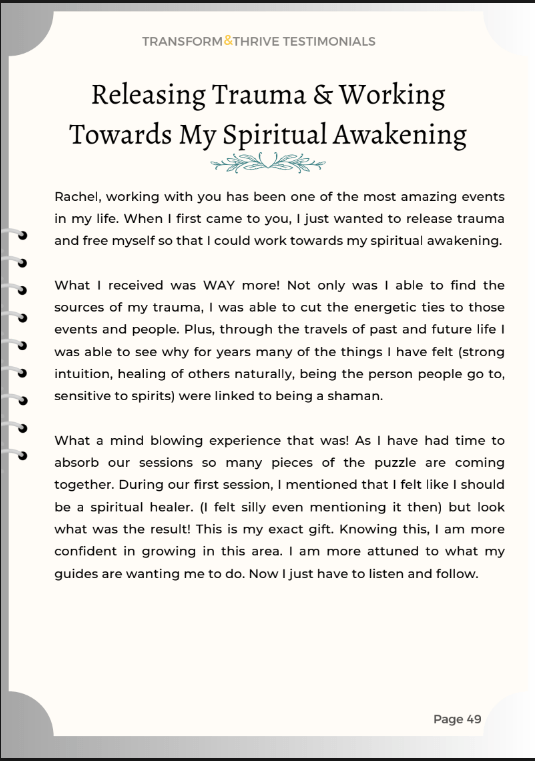
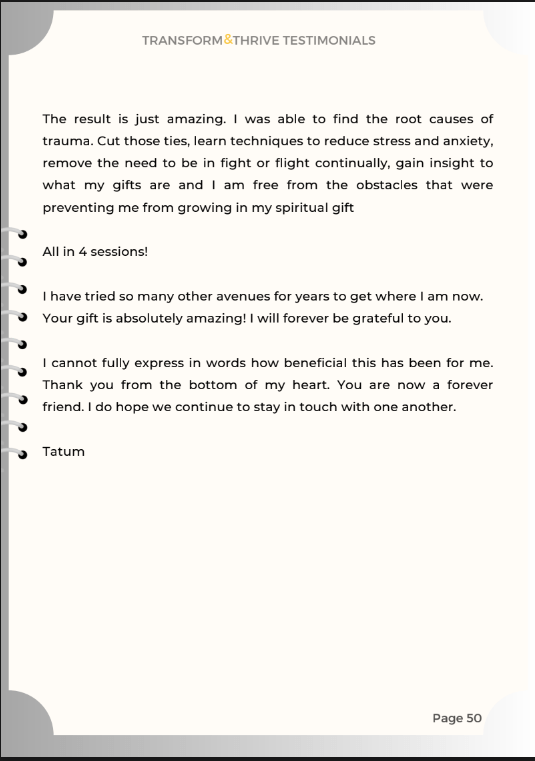
Here’s a testimonial from Tatum, sharing how we collaborated to release trauma and work toward his spiritual awakening, and how much he has improved since then. If you’d like to see more testimonials from my clients, click “TRANSFORM&THRIVE” to download them for free, or feel free to message me directly!
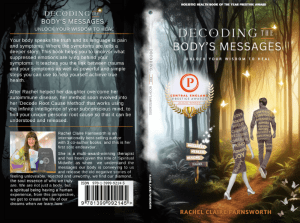
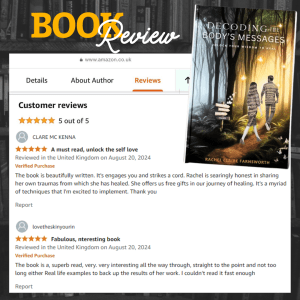
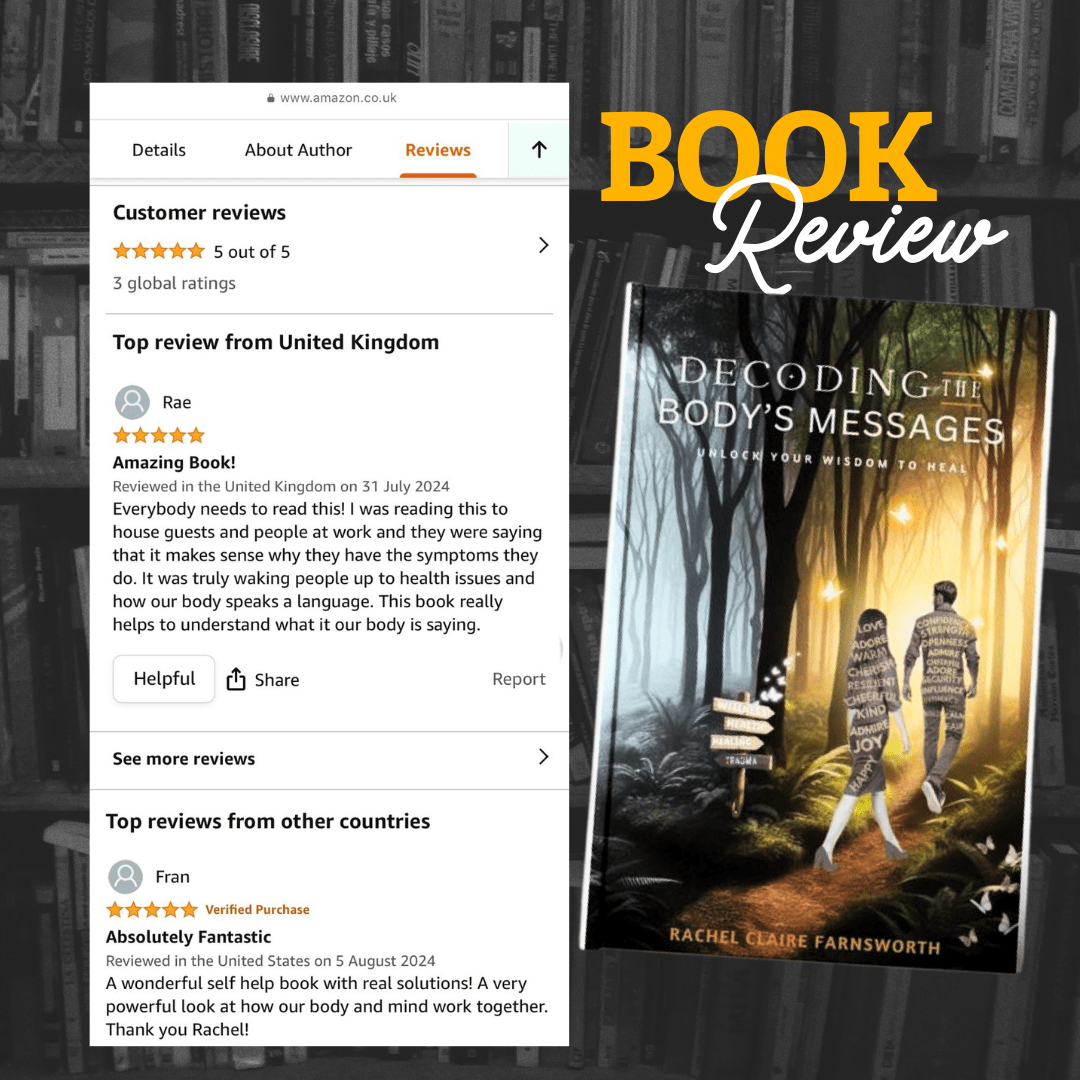
Here’s my book where I delve into how trauma and other factors can manifest as diseases, and pain symptoms. Check it out to learn more and take steps toward better health!